Magazine Dimensions Magazine Size (2026 Complete Guide
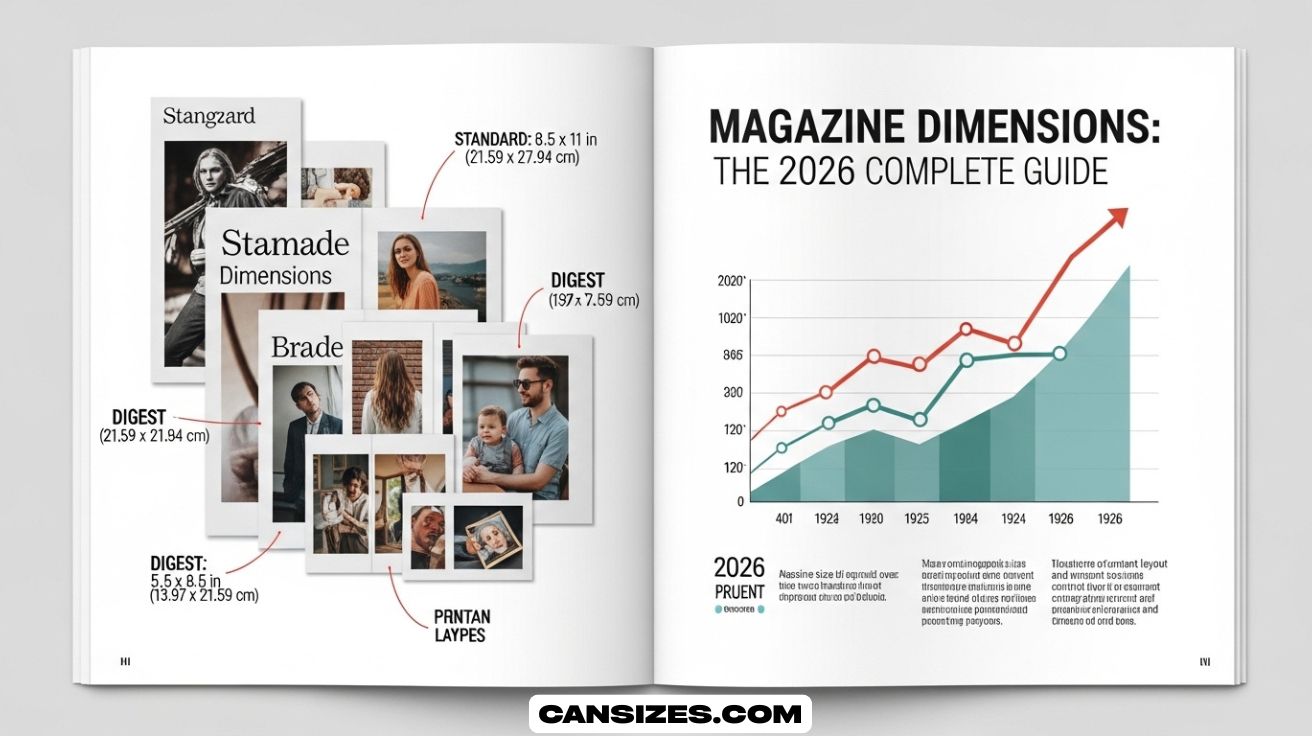
Magazine Dimensions means the size of a printed magazine page that shows its length and width in a fixed format. It helps define how big or small a magazine looks when it is printed and used by readers. It is an important part of magazine design and printing work in simple publishing systems.
Magazine Dimensions attract readers because size affects how a magazine feels in the hand. A proper size makes reading easy and improves the overall visual experience for users. Publishers choose sizes carefully to make magazines look neat and professional.
Magazine Dimensions are usually based on standard paper sizes like A4 and A5 used in printing. Some magazines use custom sizes to create a unique style and better presentation. These sizes help improve layout design, printing quality, and reading comfort for everyone.
Standard Magazine Dimensions
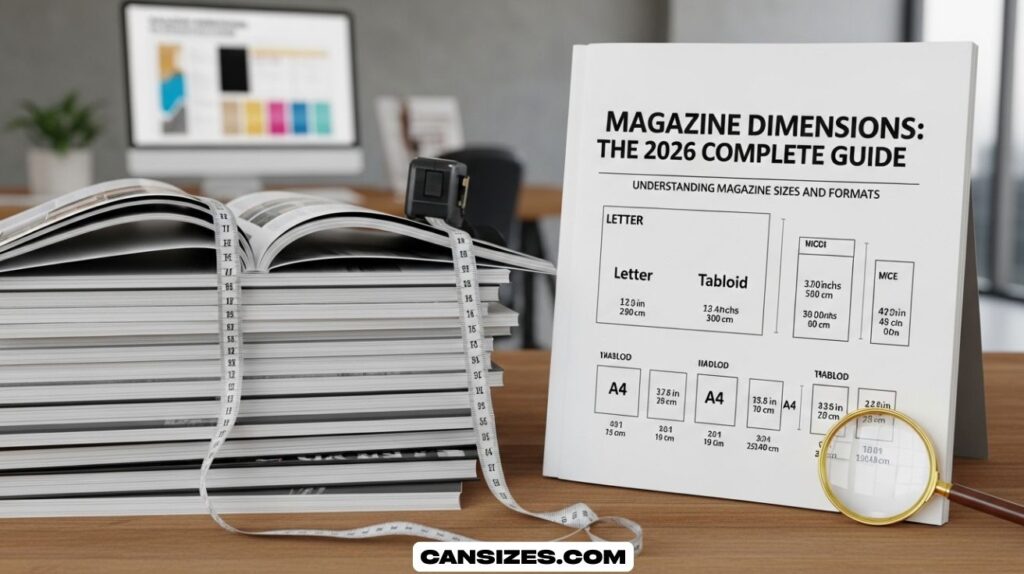
The standard magazine dimensions used in the United States follow a few common industry formats that balance readability, printing cost, and design flexibility. These common magazine sizes for printing are widely accepted because they match paper standards and printing machine setups.
The most widely used formats include letter size, digest size, and tabloid size. These sizes define magazine cover size requirements and also affect magazine page layout, spacing, and overall design structure. Publishers choose sizes based on audience behavior, content type, and production budget.
In professional publishing, selecting the best size for magazine layout design is one of the most important decisions. A wrong choice can affect readability and printing cost significantly.
Letter Size Magazine (8.5 × 11 inches)
The letter size magazine format is the most common in the United States. It measures 8.5 × 11 inches, which matches standard office paper. This makes it one of the most efficient formats in publishing.
When people ask how big is a magazine page, this is usually the reference point. The size is large enough for images, advertisements, and editorial content, yet still easy to handle. Many popular magazines use this format because it supports flexible layouts and high-quality visuals.
This format is widely used in magazine dimensions in mm and inches charts because it equals 216 × 279 mm. Designers prefer it because it works perfectly with magazine printing size standards and commercial printing systems.
A publishing expert once said, “Letter size magazines balance creativity and practicality better than any other format.”
Digest Size Magazine (5.5 × 8.5 inches)
The digest size magazine dimensions are smaller and more compact, measuring 5.5 × 8.5 inches. This format is designed for portability and easy reading.
It is often used in travel magazines, educational content, and subscription-based publications. This size reduces printing costs while still maintaining strong readability.
In terms of difference between magazine formats, digest size focuses more on convenience than visual impact. It is ideal for readers who prefer lightweight publications.
From a design perspective, digest size requires careful planning of editorial layout design because space is limited. Designers must use fewer images and more structured text blocks.
Tabloid Size Magazine (11 × 17 inches)
The tabloid magazine size is large and visually powerful, measuring 11 × 17 inches. This format is widely used for photography magazines, entertainment publications, and premium editorial content.
It allows designers to fully explore large visuals and creative layouts. However, it increases printing and shipping costs due to its size.
This format is often chosen for high-impact storytelling where visuals matter more than portability. It also requires strong attention to magazine cover dimensions because covers must match the bold interior layout.
In publishing terms, tabloid size is considered the most expressive among all publication size standards.
Magazine Binding Types and Their Impact on Dimensions
The structure of a magazine is not only defined by size but also by how it is bound. Different magazine binding types directly affect durability, thickness, and even final dimensions.
Binding determines how pages are held together and influences the reading experience. It also impacts magazine cover size requirements and spine design.
Saddle Stitch Binding
The saddle stitch binding method uses staples along the fold of the magazine. It is commonly used for smaller magazines with fewer pages.
This method is cost-effective and ideal for lightweight publications. It works best with standard magazine dimensions like letter and digest sizes.
Because of its simplicity, saddle stitching is widely used in newsletters, brochures, and short magazines. It also supports efficient production without increasing costs.
Perfect Binding
The perfect binding magazines method uses glue instead of staples, creating a flat spine similar to a book. This method is used for thicker and more professional publications.
It provides a premium appearance and is commonly used in fashion, business, and luxury magazines. It supports higher page counts and stronger durability.
From a design point of view, it requires careful planning of magazine cover dimensions and spine width. It is more expensive but adds value to the final product.
Wire-O Binding
The wire-o binding format uses a metal spiral that allows magazines to open fully flat. This is useful for instructional magazines, planners, and reference guides.
It is extremely functional but not commonly used in mainstream magazine publishing. It allows easy page flipping and durability for frequent use.
However, it requires special layout adjustments in magazine page layout because the binding affects spacing near the spine.
See Also : Jerry Can Dimensions Size, Height (USA Guide 2026)
Specialized Magazine Sizes and Formats
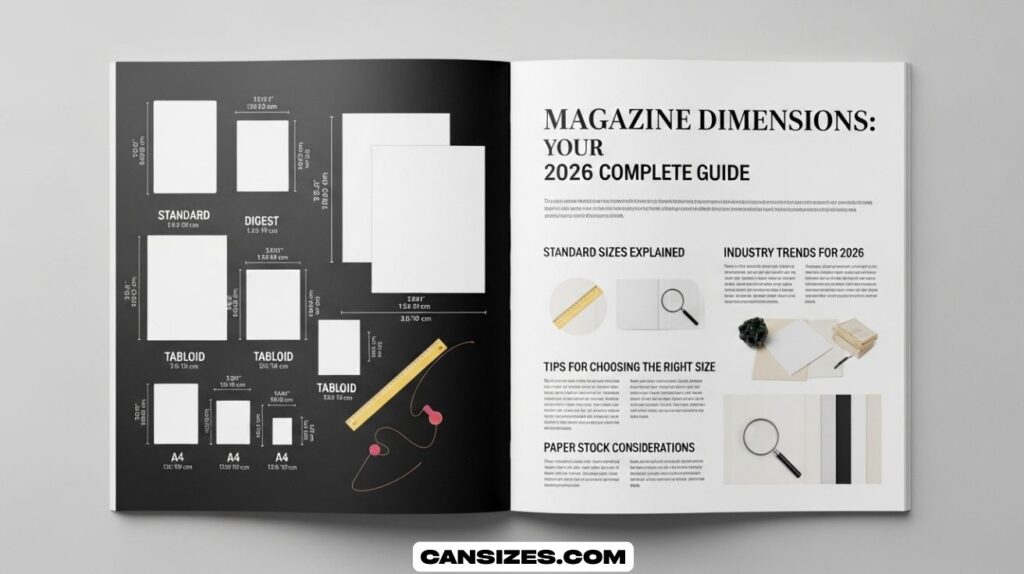
Not all magazines follow standard sizes. Some industries use custom dimensions for branding and audience engagement. These oversized magazine dimensions or mini formats serve specific publishing goals.
Pocket Size Magazines (3.5 × 5 inches to 4 × 6 inches)
The pocket magazine format is extremely small and portable. It is designed for readers who want quick access to information.
These magazines are often used for travel guides, mini catalogs, and promotional materials. They reduce cost but limit design flexibility.
Despite their size, they remain effective in niche markets where portability is more important than visuals.
Square Format Magazines (8 × 8 inches or 8.5 × 8.5 inches)
The square format offers a unique visual style. These standard magazine dimensions are popular in photography and creative industries.
The symmetrical layout enhances artistic presentation and improves visual balance. Designers often prefer this format for storytelling-based magazines.
It also supports modern responsive magazine design principles when adapted for digital use.
Oversized Magazines (9 × 12 inches and larger)
The oversized magazine dimensions are used for luxury and premium publications. These formats are common in fashion, architecture, and high-end branding.
They allow large images, detailed layouts, and strong visual storytelling. However, they increase printing and shipping costs.
Publishers use this format when visual impact is more important than portability or cost efficiency.
See Also : Kitchen Trash Can Dimensions Size, Height
Digital vs Print Magazine Dimensions
Modern publishing requires understanding both print and digital formats. The digital vs print magazine size difference is essential for multi-platform publishing.
Print Magazine Specifications
Print magazines follow strict technical standards like print resolution 300 DPI and CMYK color mode printing. These ensure high-quality physical output.
Designers must also consider bleed and trim size, which prevents white edges after cutting. A typical magazine bleed and margin size includes 0.125-inch bleed and safe margins inside the layout.
Paper quality also matters. Paper weight for magazines affects durability, texture, and reader perception.
These rules are part of magazine printing size standards used worldwide.
Magazine Dimensions
Digital magazines use pixel-based formats such as 1080 × 1920 for mobile and 1536 × 2048 for tablets. This is called digital magazine pixel size.
Unlike print, digital formats use RGB color mode printing and support interactive features like videos and hyperlinks.
Modern platforms rely on responsive magazine design, allowing content to adapt automatically to screen size.
Designers using Adobe tools often follow magazine size for Adobe InDesign standards to ensure smooth export between print and digital formats.
How Magazine Dimensions Affect Reader Experience
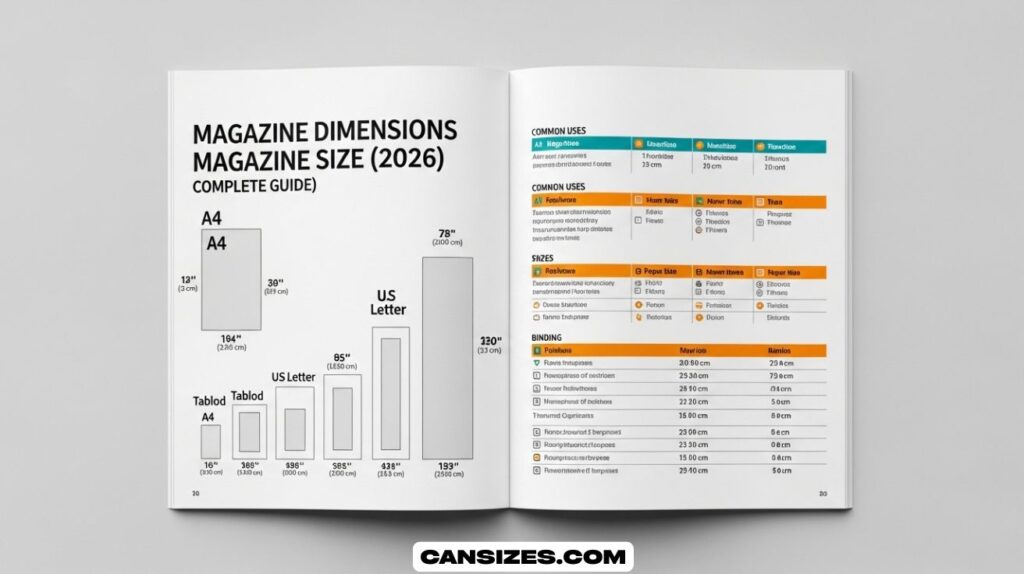
Magazine dimensions directly influence how comfortable and engaging the reading experience feels. Larger formats like tabloid sizes allow more visuals and spacious layouts, while smaller digest formats feel more personal and portable. The choice of size impacts how readers interact with text, images, and advertisements, shaping overall satisfaction and engagement.
Designers also consider readability factors such as font scaling, image placement, and white space. A well-balanced magazine layout improves focus and reduces visual clutter. When dimensions are chosen correctly, readers naturally spend more time with the content, increasing retention and brand value for publishers.
Importance of Choosing the Right Magazine Size for Printing
Choosing the right magazine size is critical for controlling production costs and achieving design efficiency. Standard formats like letter size reduce printing complexity, while custom sizes may increase expenses. The decision also affects paper usage, shipping costs, and binding methods, making it an essential step in publishing planning.
Publishers also consider audience expectations and content type when selecting sizes. For example, fashion magazines often prefer larger formats for visual impact, while educational content uses compact sizes. A strategic choice ensures better market performance and smoother production workflow across printing and distribution channels.
See Also : 21 Daily Use Items Measuring 7 Inches Long (2026)
Magazine Cover Dimensions and First Impressions
Magazine cover dimensions play a powerful role in attracting readers at first glance. A well-designed cover must match the internal page size while maintaining strong visual hierarchy. Covers act as the first marketing tool, influencing whether a reader picks up or ignores the magazine.
Designers carefully balance images, headlines, and branding within limited space. Proper alignment with standard dimensions ensures consistency and professional appearance. A strong cover layout enhances shelf visibility and strengthens brand identity, making it a key factor in publishing success.
Magazine Layout Design and Grid Structure
Magazine layout design depends heavily on structured grids that align with chosen dimensions. Designers use columns, margins, and spacing systems to maintain consistency across pages. These grids help organize content clearly, making articles and visuals easier to read and visually appealing.
A strong layout system improves storytelling by guiding the reader’s eye naturally through the page. Proper spacing, alignment, and typography ensure balance between text and images. When dimensions are planned correctly, layout design becomes more efficient and visually engaging for audiences.
How Binding Changes Final Magazine Thickness and Size
Binding methods influence not only durability but also final magazine thickness. Saddle stitch keeps magazines slim and lightweight, while perfect binding adds spine thickness and a book-like structure. Wire-o binding increases flexibility but changes physical dimensions slightly when pages rotate.
These differences affect storage, shipping, and overall presentation. Publishers must adjust layout files depending on binding choice to avoid trimming issues. Understanding binding impact ensures accurate final output and prevents design misalignment during production and printing stages.
Paper Weight and Its Role in Magazine Quality
Paper weight significantly affects the feel and quality of a magazine. Heavier paper gives a premium look, especially for covers, while lighter paper reduces production costs and makes magazines easier to handle. Publishers choose paper weight based on audience expectations and content type.
Interior pages usually use lighter stock for readability, while covers require stronger material for durability. The balance between weight and cost plays a major role in publishing decisions. Proper selection enhances both visual appeal and long-term usability.
Future of Magazine Dimensions in Digital Publishing
The future of magazine dimensions is shifting toward flexible digital-first formats. Instead of fixed sizes, designers now create responsive layouts that adapt to multiple devices. This evolution supports mobile reading, tablets, and interactive content experiences.
Print standards still remain important, but digital publishing is redefining how dimensions are used. Scalable design systems, adaptive grids, and dynamic layouts are becoming standard. This shift allows publishers to reach wider audiences while maintaining consistent brand identity across platforms.
FAQs
What are normal magazine dimensions?
Most magazines are around A4 size (21 × 29.7 cm), though some use A5 or custom sizes.
Is Vogue magazine A4 size?
No, Vogue is not exactly A4; it is close to US magazine size (~20.5 × 27.5 cm).
Is a magazine A4 or A5?
Magazines can be either A4 or A5, depending on the publisher and style.
What is the size of a magazine in CM?
Common magazine sizes range from about 17 × 24 cm to 22 × 30 cm.
Conclusion
Magazine Dimensions are usually based on standard paper sizes used in printing. Most magazines follow A4 size, which measures 21 × 29.7 cm. Some magazines use smaller A5 size, which measures 14.8 × 21 cm. Publishers choose sizes based on design, cost, and reading comfort. Larger sizes allow more images and better layout, while smaller sizes make magazines easy to carry. These common sizes help printing companies produce magazines in a consistent way.
Magazine Dimensions also vary slightly between countries and brands. Some magazines use custom sizes between 17 × 24 cm and 22 × 30 cm. Vogue and other fashion magazines often use slightly different sizes for a stylish look. These variations help magazines stand out and match their content style. Overall, Magazine Dimensions play an important role in appearance, readability, and presentation. Understanding these sizes helps readers and designers know how printed media is structured.